How it works
From raw idea to evidence investors trust
StartupAI gives founders a structured workflow for turning an idea into a founder brief, customer fit analysis, tracked assumptions, and a better next test.
The workflow is designed to help founders explain the idea, pressure-test it, and leave with the next experiment worth running.
Current workflow
1. Idea input
“Freelancers lose time chasing late invoices and need a faster follow-up workflow.”
2. Structured analysis
Founder brief, customer fit analysis, and open assumptions stay in one saved workspace.
3. Next recommendation
Interview five freelancers about invoice delays before you spend time building automation.
The founder path
Three moves, no maze
The current product experience stays intentionally narrow: explain the idea, inspect the workspace, then decide what deserves validation next.
The model underneath
Open the deeper model only when it helps
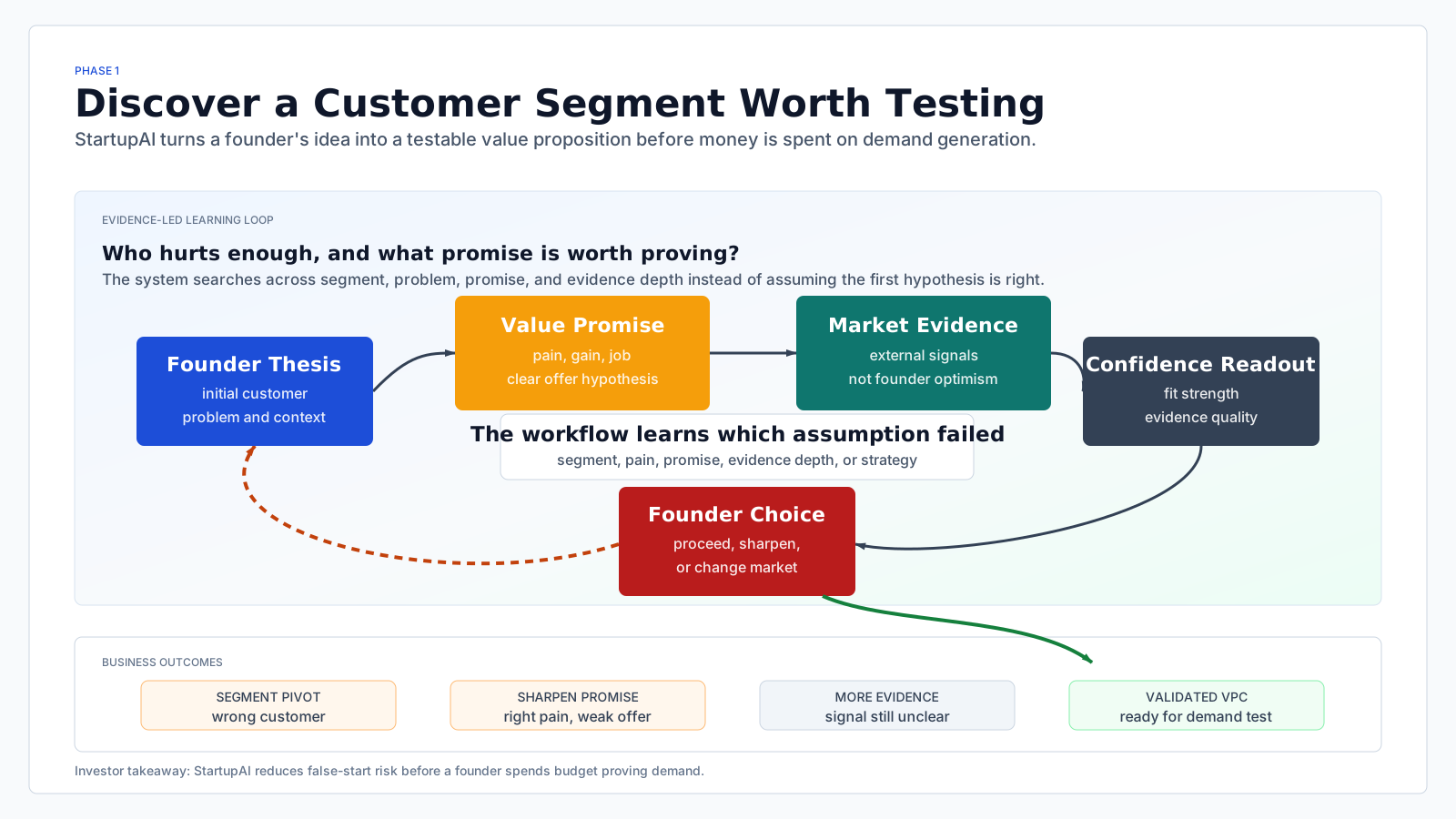
The founder path stays simple on the surface. The phase model is available when someone wants to inspect how discovery turns into deeper evidence about desirability, feasibility, and viability.
Phase 1
Discovery
Shape the customer, problem, value promise, and assumptions into a testable starting point.
Produces
Sharper customer-fit read, value proposition, and evidence gaps.
Shape the customer, problem, value promise, and assumptions into a testable starting point.
Produces
Sharper customer-fit read, value proposition, and evidence gaps.
Outputs
What the workflow gives you today
The product is strongest when used as a saved validation workspace, not as a one-time document generator.
Working baseline
Founder Brief
A cleaner articulation of the idea so your validation work starts from something coherent instead of scattered notes.
- Customer, problem, and offer in one view
- A stable baseline for later iterations
- A better starting point than another blank prompt
Customer lens
Customer Fit Analysis
A structured view of customer jobs, pains, and gains against what your product promises to improve.
- Highlights likely fit and weak spots
- Keeps the customer lens grounded early
- Pushes beyond vague encouragement
Evidence discipline
Assumption Tracking
A saved record of the claims that still need evidence so the work stays honest as the idea evolves.
- Keeps risky assumptions visible
- Shows what is still belief
- Makes each iteration easier to compare
Next move
Recommended Next Steps
A clearer suggestion for what to validate next instead of leaving you with analysis and no direction.
- Prioritized next experiment ideas
- Direction on where to focus first
- A stronger basis for the next iteration
Early beta cadence
Hands-on beta cycles keep the workflow honest
The first founder cycles are deliberately hands-on so the evidence review, judgment calls, and next-step recommendations stay grounded while the product matures.
Week 1
Clarify the test
We tighten the brief, identify the riskiest assumption, and define what useful signal would look like.
Week 2
Collect signal and decide
We put the idea in front of real people, review the evidence, and close with a proceed, revise, or pivot recommendation.
What comes back
A focused evidence packet: what changed, what got stronger, what remains unproven, and what the founder should do next.
Start free
Run the workflow on your own idea.
Start with your idea. Finish Phase 1 with a brief, real evidence, and something worth showing — free, 30 days, no card.
Free trial includes
- 30 days, no credit card
- 1 founder project
- Up to 3 full Phase 1 validation cycles
- Brief, plan, collection kit, evidence, and discovery output
- Saved workspace during the 30-day trial